Guides 4 min read
Expected points explained: inside the FPLRogue model
Read expected points, minutes and displayed ranges correctly, then use a real GW5 scorecard to see why the evaluation group changes the accuracy headline.
Evergreen guides and current planning advice for chips, squad structure, fixture swings and decision-making under uncertainty.
Use the related toolRead expected points, minutes and displayed ranges correctly, then use a real GW5 scorecard to see why the evaluation group changes the accuracy headline.
Brighton humbled Arsenal, City survived an eight-goal thriller and Coventry mugged the week's fashionable Forest picks. We audit the forecasts and map the best routes into GW6–10.
Brighton brought the goals, Pascal Groß topped the points and GW4 again showed why minutes evidence matters more than chasing yesterday's fireworks.
Manchester City and Nottingham Forest supply the strongest immediate routes, but the international break makes secure minutes and a multi-week plan especially valuable.
Tyrick Mitchell led GW3's 15-point chaos, Liverpool's attackers supplied the strongest follow-up case and the model's late minutes calls need an honest audit before GW4.
The final City briefing leaves Haaland's role intact, while a refreshed model and legal £100m reference squad quantify the chip decision.
Manchester City still own GW3's best fixture, but three deadline-day arrivals make their individual minutes—and several rival squads—less certain.
Brighton supplied the biggest win and the top two FPL hauls, Hull and Brentford delivered the shocks, and the individual model picks produced lessons in points, minutes and basic employment checks.
Build a legal £100m squad, pick a starting XI and captain before each deadline, then use transfers and chips to respond to fixtures, form and availability.
Manchester City and Manchester United provide the strongest opening attacking routes in the three-Gameweek model, while Arsenal remain the premium defensive benchmark.
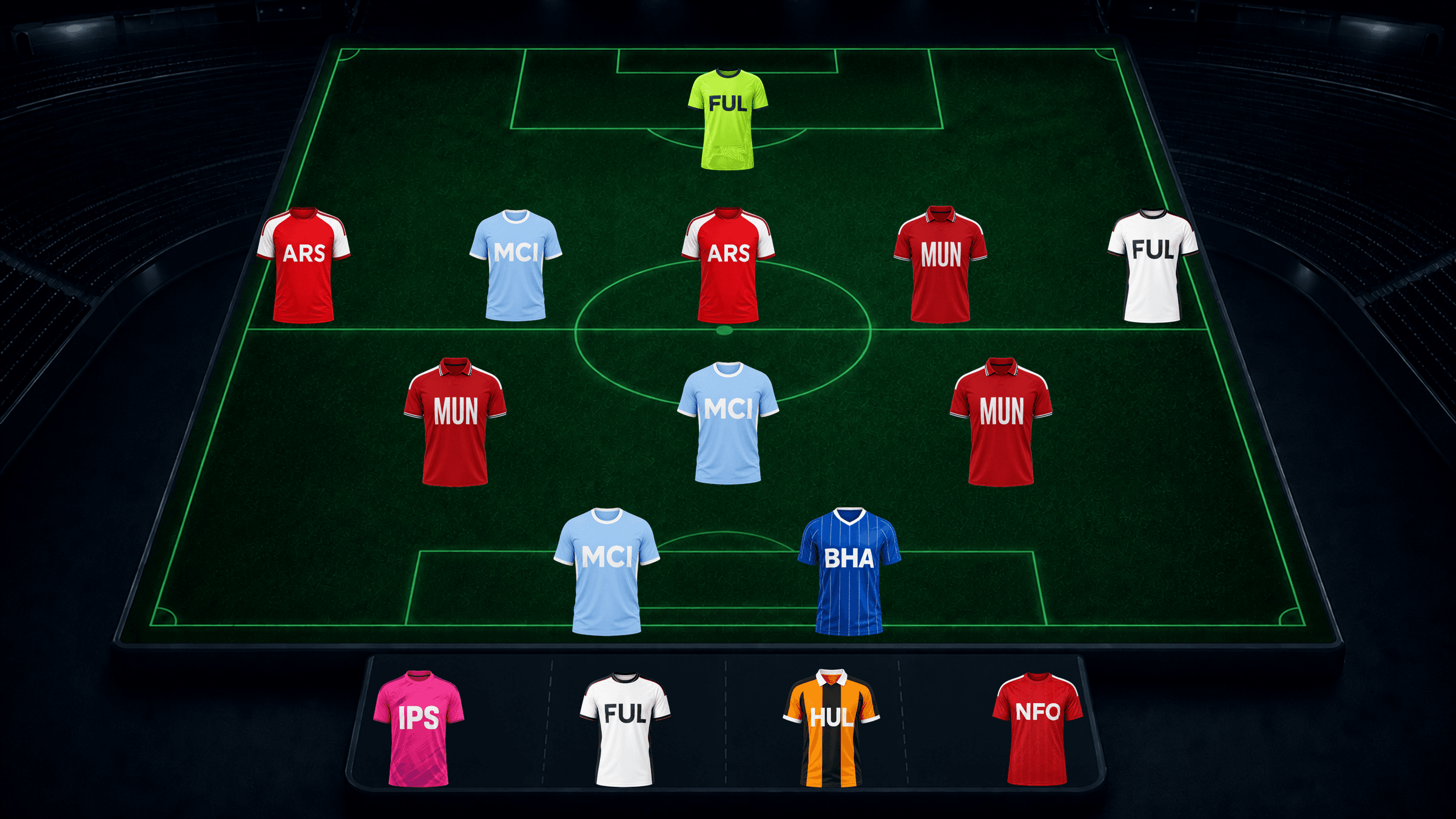
Our first legal £100m draft combines Haaland and Bruno Fernandes with premium defence, then uses a deliberately cheap bench to preserve the strongest projected starting XI.
The FPLRogue reference squad leaves 11.98 xPts on the GW1 bench. That makes Bench Boost viable—but minutes risk and a slightly stronger GW2 projection keep the call conditional.